

12 Abr Why Solana Analytics Need a Better Explorer—and How Solscan Fills That Gap
Whoa! The Solana ecosystem moves fast. Really fast. Transactions pop up like notifications during a holiday sale—nonstop, messy, and rich with signals if you know where to look. My first impression when I started following Solana analytics was: somethin’ feels missing. The raw data’s there, but tooling matters. Hmm… this is about more than speed; it’s about clarity.
At a glance, blockchain explorers are like the dash on a car. Short info. Quick checks. Then you dig and you want more: holder distribution, mint timelines, program call traces, and NFT floor-price shifts that happen in a blink. On one hand, basic explorers give you block and tx details. On the other hand, analysts and traders need stitched-together views—wallet behavior over time, whale hunts, liquidity movement. Initially I thought a simple search box would do the trick, but then realized that contextual analytics and NFT tracking are what separate a browser from a real analytics platform.
Here’s the thing. Solana’s architecture (high throughput, low fees, parallelized runtime) produces a ton of events in short windows. So you need an explorer built to surface patterns, not just raw rows. Solscan is one of those explorers that moves beyond «was this tx confirmed?» to «who moved the liquidity, and did they mint a rare trait?» It’s not perfect—nothing is—but it offers the kind of telemetry that helps answer actual questions traders and devs have when they’re in a hurry.
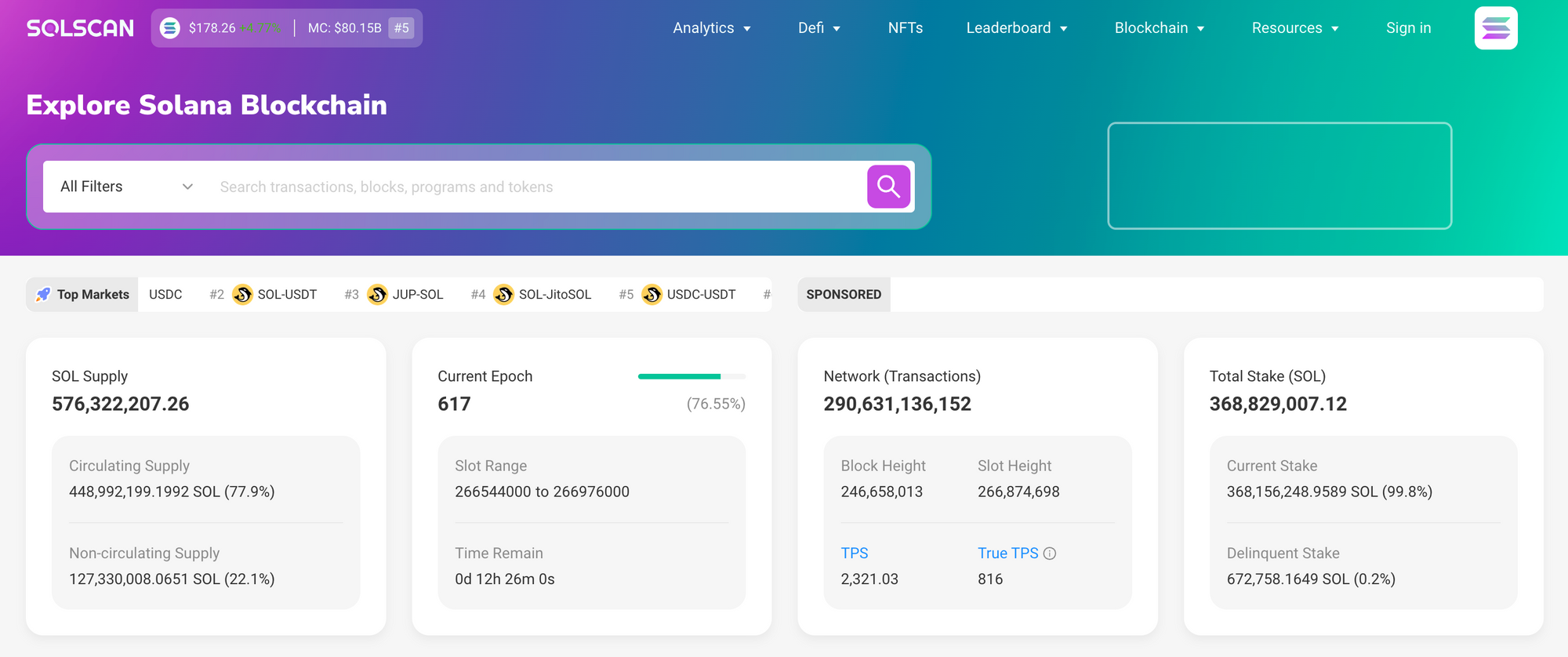
Where blockchain explorers typically fall short
Quick checklist: transaction lookup—yay. Block height and timestamp—yep. But deeper things often miss the mark. You might want holder concentration charts. Or to track a smart contract upgrade path. Or find mint addresses for a collection and follow which wallets flipped early. A standard explorer shows the transactions. But it doesn’t put them in the context of token health, on-chain liquidity, and marketplace flows. That context is everything when you’re triaging a rug pull, or sizing up an NFT collection before a flip.
Okay, so check this out—some real gaps: token holder distribution is often buried or absent. NFT metadata and rarity distributions are inconsistent between explorers. Cross-referencing on-chain swaps with DEX liquidity events is clunky. And for people who need alerts—like ops teams or market makers—limited notification tooling is a bummer. I’m biased, but tooling that surfaces those relationships is crucial. It helps you save time, and sometimes money.
Seriously? Yes. Because not all on-chain activity is noise. Patterns repeat: a whale accumulates; price moves; bots react; liquidity shifts. An explorer that highlights these patterns reduces the time to insight. On that point, despite occasional UI quirks and imperfect edge-case data (oh, and by the way… some metadata sources lag), modern explorers are getting there.
How to use Solscan for Solana analytics and NFT tracking
For folks who need a practical workflow—here’s a sensible approach that doesn’t demand a data-science team.
Start with a token or collection page. Look for holder distribution and concentration. If a few wallets control a large share, that’s a red flag for price manipulation. Next, examine recent txs: who is buying and selling, and are there repeated patterns from the same program accounts? Use program call traces to see if swaps route through concentrated liquidity pools or obscure program flows.
For NFTs: check mint events first. Who were the initial minters? Who held through the first market movement? Use rarity filters where available because trait-weighted floors matter—sometimes the highest-priced items aren’t the rarest, but they’re the most visible. Then track floor-price history and volume—sudden spikes in volume with no new buyer fundamental can hint at wash trades. Hmm… that part bugs me.
Pro tip: combine on-chain signals with off-chain context. A community Discord or social spike often precedes on-chain activity—but not always. On one hand social hype can predict movement; on the other hand, it can be manufactured. So pair the on-chain evidence with the chatter. That’s very very important.
If you want a single, quick resource to start with, try Solscan—it’s a pragmatic mix of raw blockchain data and analytics that helps cut through noise. The explorer is accessible and links deep into program interactions, token dashboards, and NFT pages. For direct access, the official site is here: https://sites.google.com/cryptowalletextensionus.com/solscan-explorer-official-site/
That link will take you to the explorer where you can search by address, token, or collection. Use the filters. Use the charts. Be aware that no single view tells the whole truth—corroborate before you act. Initially I thought the dashboards were enough; actually, wait—let me rephrase that—dashboards are a starting point.
Analytics features that matter (and why they matter)
Holder distribution: reveals concentration risk. Short-term trading desks and long-term investors both care.
Program call traces: show how a transaction flowed through the runtime—useful for debugging and forensic work.
NFT rarity and mint timelines: help you see who got in early and which traits drive long-term value.
Liquidity & pool snapshots: indicate how easy it is to enter/exit without slippage.
Searchable logs and event decoding: speed up root-cause when a failed tx or unexpected transfer happens.
On one hand, these features reduce guesswork. On the other hand, they require maintenance and external data consistency. Developers need to vet metadata sources and cross-check oracle feeds. There are inevitable blind spots—sometimes metadata is missing or malformed, or a program uses novel CPI patterns that break heuristics. Those are the times where human judgement still wins.
FAQ
Can explorers like Solscan be used for security audits?
They can help. An explorer shows on-chain behavior and call traces, which are useful for preliminary checks. But a full security audit requires access to source code, runtime tests, and off-chain dependencies. Think of explorers as a forensic lens—great for surface-level triage, not a substitute for thorough audits.
How reliable is NFT metadata across explorers?
It’s hit-or-miss. Many collections host metadata off-chain (Arweave, IPFS, centralized URLs). Some explorers cache metadata; others rely on live fetches. Expect occasional mismatches. Always verify canonical metadata from the collection’s minting program or the project’s docs when possible.
Are analytics features free to use?
Most basic analytics and search are free. Advanced features—API access, heavier historical queries, or enterprise dashboards—often require paid tiers or API keys. If you need programmatic access, check the explorer’s API docs and rate limits before building automation atop it.
Wrapping up (but not tying everything in a neat bow)—Solana analytics and NFT tracking demand explorers designed for pattern recognition, not just data dumps. Tools like Solscan narrow the gap between raw blocks and actionable insight. They help answer practical questions: who moved the tokens, where did the liquidity go, and which NFTs are actually trading versus just being hyped.
I’m not 100% sure any single tool will cover every edge case. Still, using an explorer that blends transaction detail with higher-level analytics saves time, and sometimes prevents mistakes. There’s room for improvement—UX kinks, metadata lag, and complex program flows still surprise users—but the direction is promising. Stay skeptical. Cross-check. And be ready to pivot when on-chain signals change…
No Comments